
 Timothy Bramlett
A lot of founders skip any link that comes with rel="nofollow". The thinking goes: if the link doesn't pass "link juice", why bother?
That thinking is out of date. Since 2019 Google no longer treats nofollow as a strict "ignore this link" rule. It treats it as a hint, it can use nofollow links to discover new pages, and those links still send real visitors who can turn into customers and into followed links later. Below is exactly what Google has said, what the data shows, and how to think about nofollow links as a startup.
What Changed in 2019
When nofollow was introduced in 2005, Google simply ignored any link marked with it. On September 10, 2019, Danny Sullivan and Gary Illyes from Google announced that this had changed.
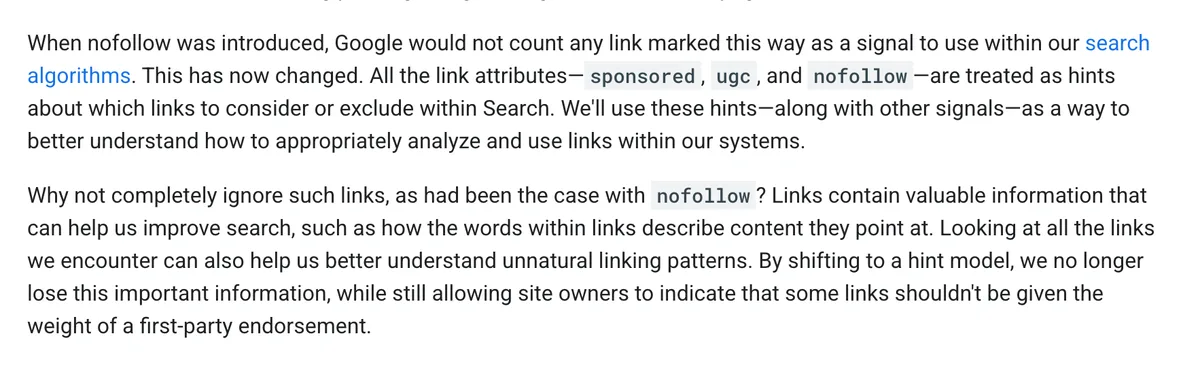
Google explained why it stopped ignoring these links completely: links carry useful information, like how the words in a link describe the page it points to, and looking at all links helps Google understand unnatural linking patterns.
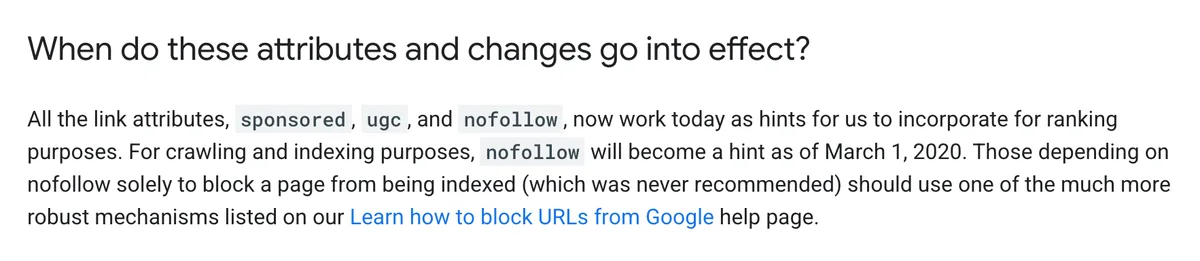
The change happened in two steps. Nofollow became a hint for ranking right away, and a hint for crawling and indexing from March 1, 2020.
What Google Did Not Promise
To be fair, the same announcement also says that in most cases nofollow links will be treated the way they always were, and not counted for ranking.
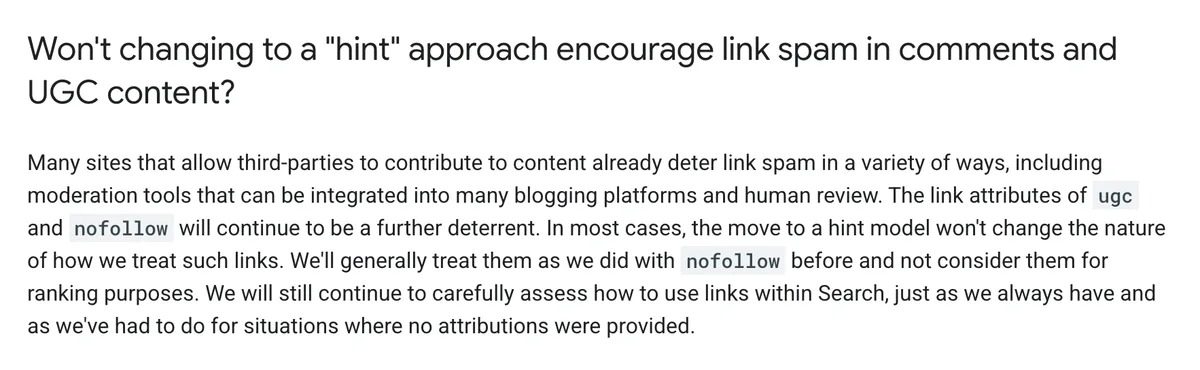
So the honest version is this. A nofollow link is not a guaranteed ranking boost. But it is no longer automatically worthless either. Google decides case by case, and it keeps the option to use the link.
What Google's Documentation Says Today
Google's current documentation on link attributes, last updated December 2025, says nofollowed links are "generally" not followed, and that the linked page can still be found and crawled through other means.
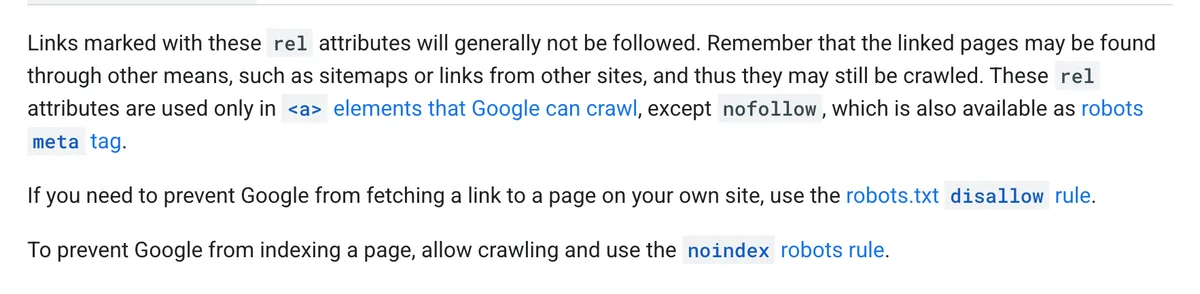
Note the word "generally". That is not the same as "never".
What Google's Own People Have Said
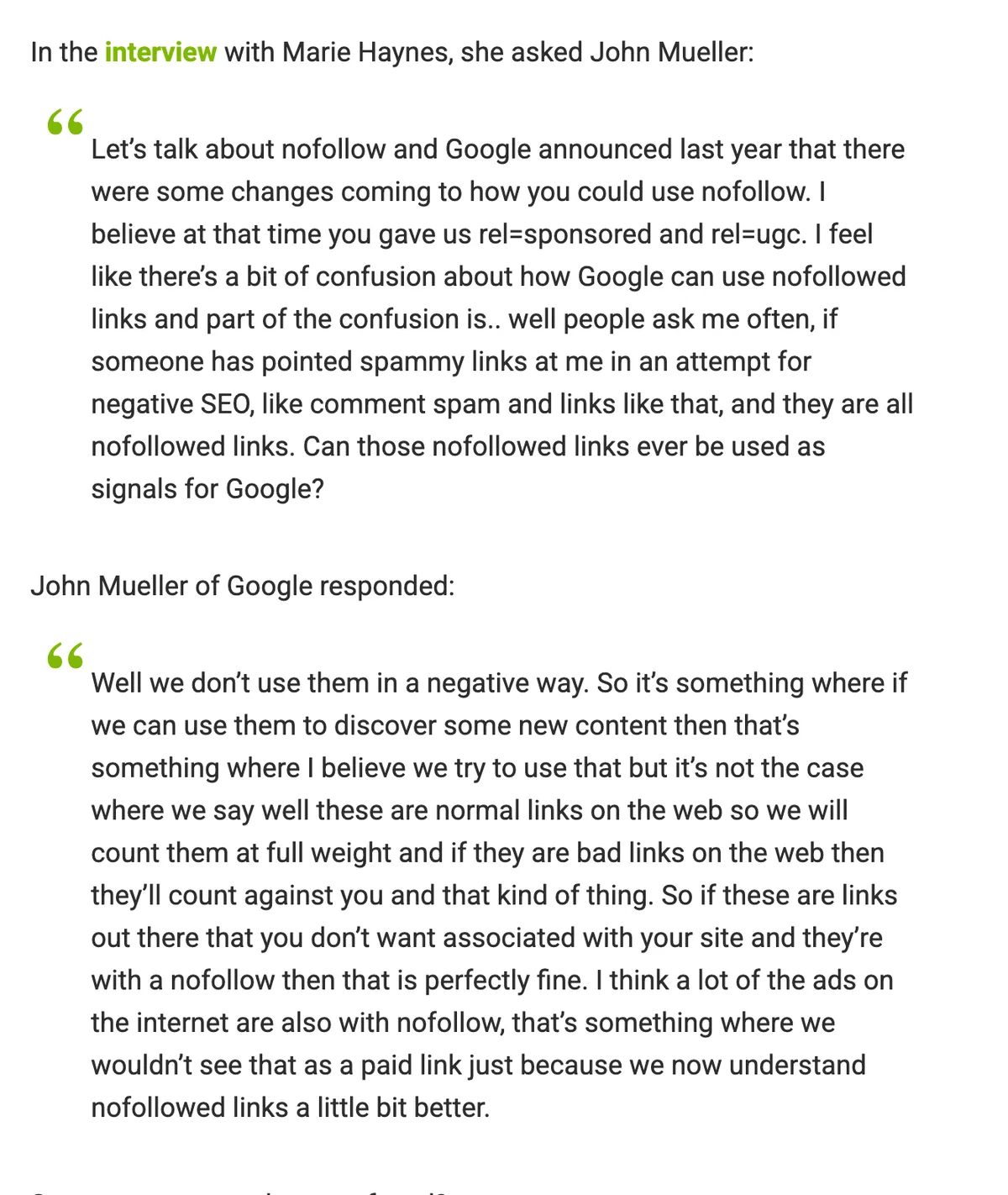
In a 2020 interview with Marie Haynes, Google's John Mueller was asked whether nofollowed links can ever be used as signals. His answer: Google may use them to discover new content, but doesn't count them at full weight.
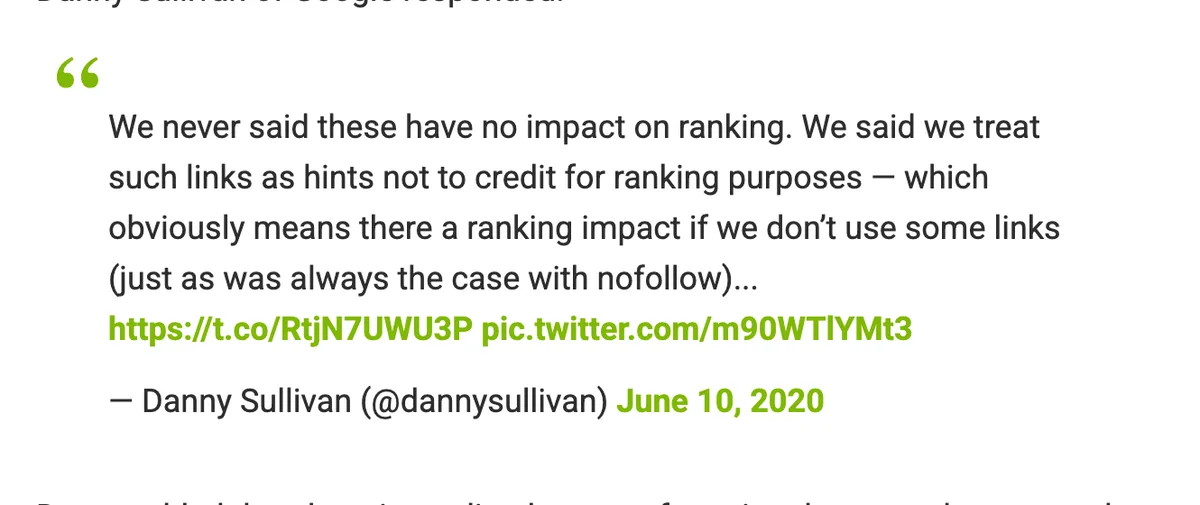
Around the same time, Google's Danny Sullivan pushed back on the idea that the hint model has no ranking impact at all.
And in 2021 Mueller said Google might learn over time to treat nofollow, ugc and sponsored links slightly differently from each other. In other words, Google is still deciding how much these links matter, case by case. That is exactly why they are worth having.
What the Data Shows
Ahrefs looked at 44,589 search results and measured how well different backlink counts correlate with rankings. The total number of backlinks, followed plus nofollowed, correlated slightly better with rankings than followed links alone (0.2793 versus 0.2576).
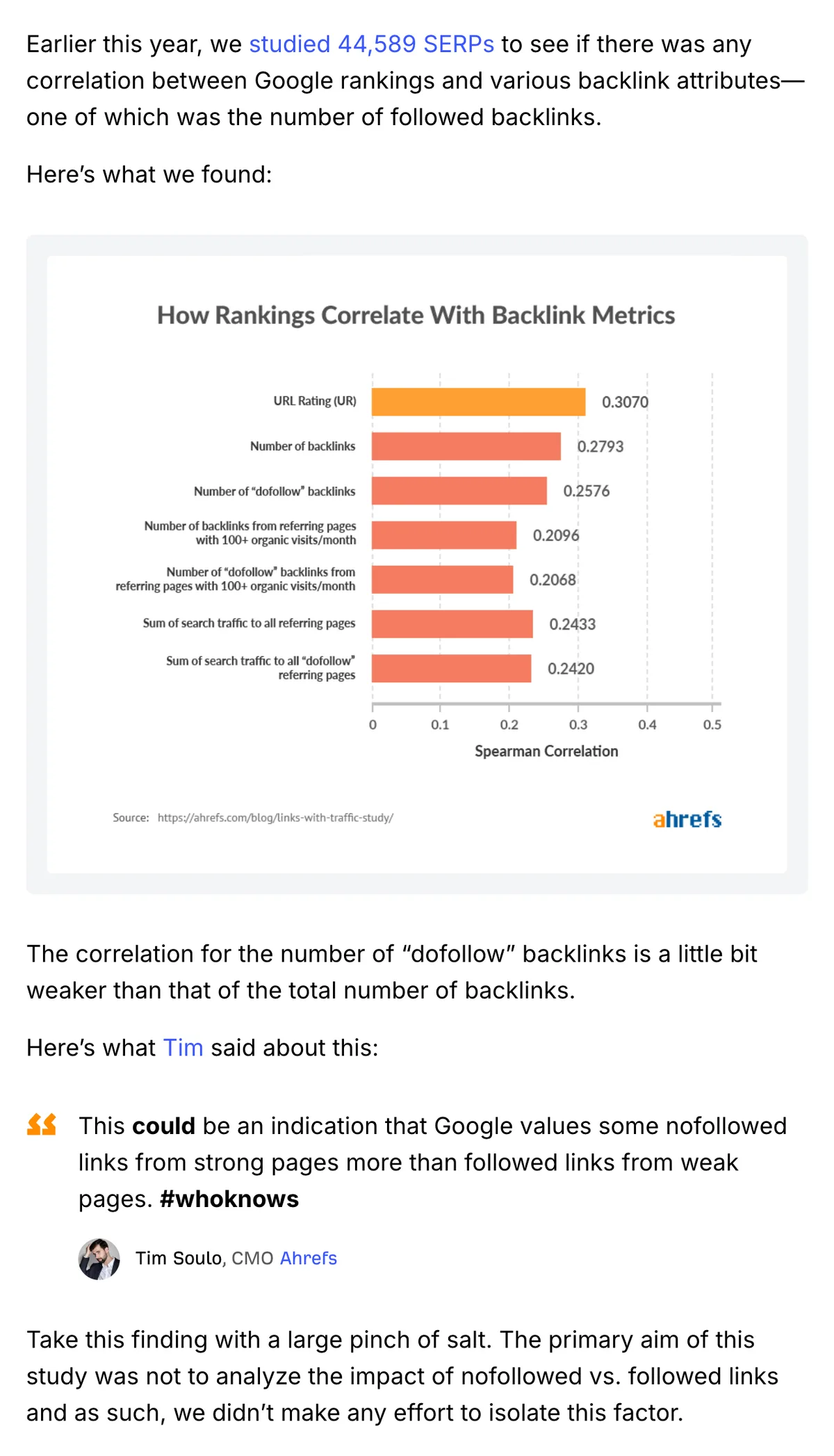
Ahrefs is upfront that this needs "a large pinch of salt". The study wasn't designed to isolate nofollow links, and correlation is not proof. Still, it's the opposite of what you would expect if nofollow links were worthless.
Semrush looked at a newer question: what gets a brand mentioned in AI answers from ChatGPT, Gemini, Perplexity and Google's AI features. Across 1,000 domains, nofollow links correlated with AI mentions almost exactly as strongly as followed links.
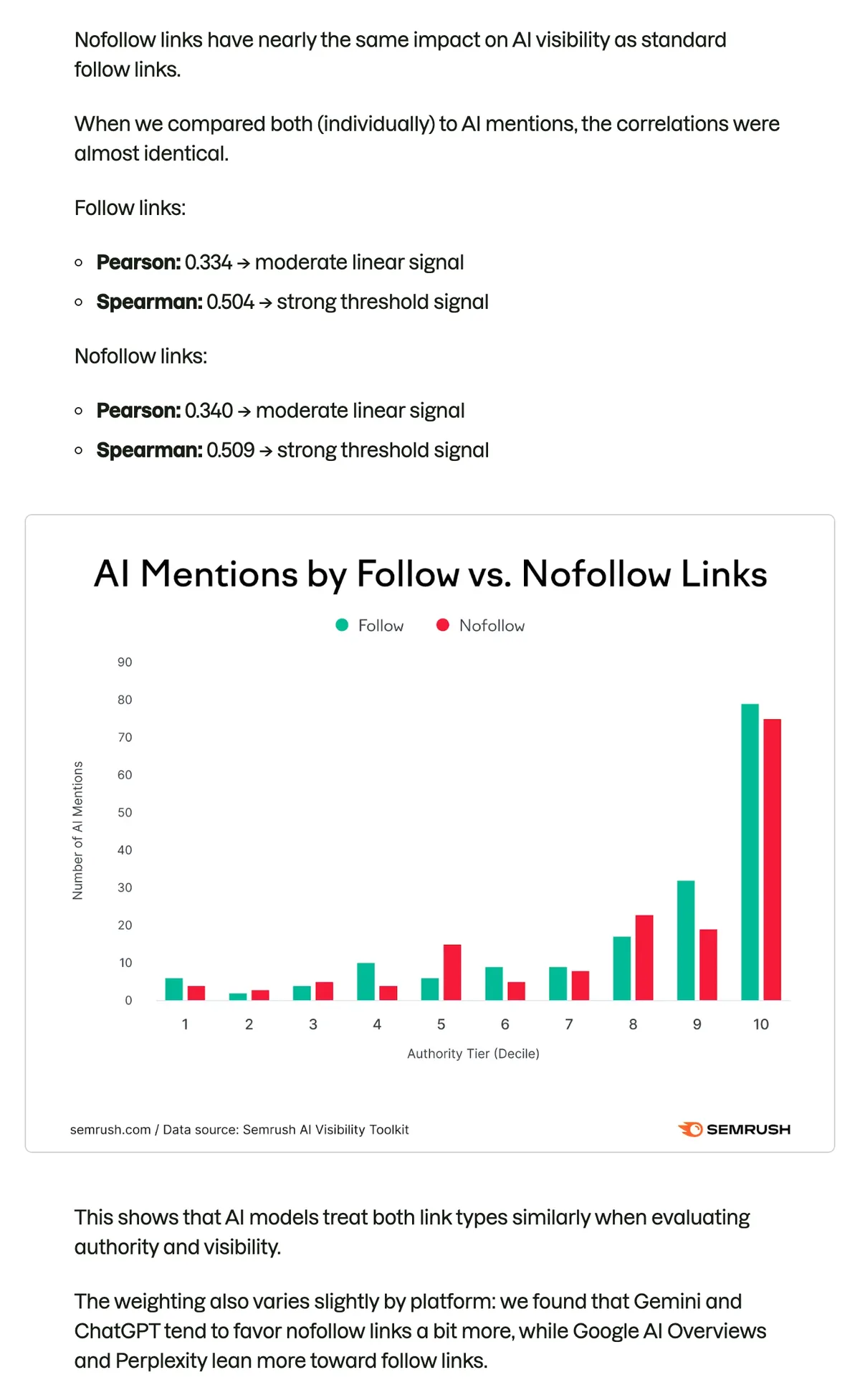
This measures AI mentions, not Google rankings, and again it is a correlation. But as more people find products by asking AI assistants, it is a signal worth paying attention to.
Nofollow Links Still Send Real Visitors
Rankings are only one reason links matter. People click links. A nofollow link on a page that real people read sends real visitors, and some of those visitors become users.
The agency Teknicks documented a single nofollow link that drove 3,922 visits over nine months, with people staying almost four minutes on average.
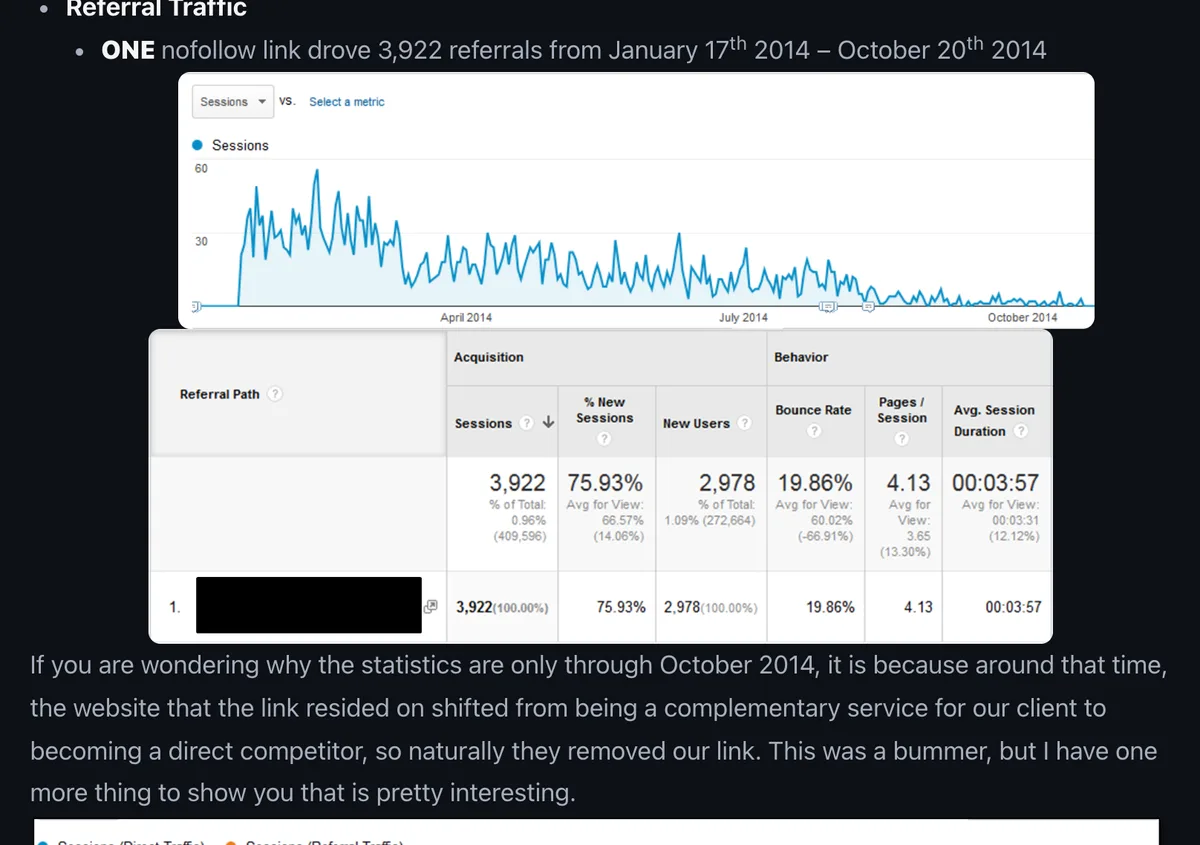
Ahrefs earns nofollowed links on Quora on purpose for exactly this reason. One of those answers was later found by a writer, who then linked to Ahrefs from their own article with a normal, followed link.

This is how links usually work in practice. Visibility leads to visitors, and visitors who write about you lead to more links.
Where Startups Get Nofollow Links
Many of the places where early startups get noticed add nofollow to links, often by default:
These are exactly the places where your first users are. Skipping them because the link is nofollow means skipping the traffic, the discovery and the follow on links that come from being seen.
How to Think About Nofollow Links
The Bottom Line
Nofollow links are not the "zero value" links many founders think they are. Since 2019 Google treats them as hints, it can use them to discover your pages, and they send real people to your product. They are not a guaranteed ranking boost, and Google says most of them still won't count for ranking. But for an early stage startup, the visibility, visitors and follow on links they bring are often worth more than the attribute on the link.